

James
April 11, 2025
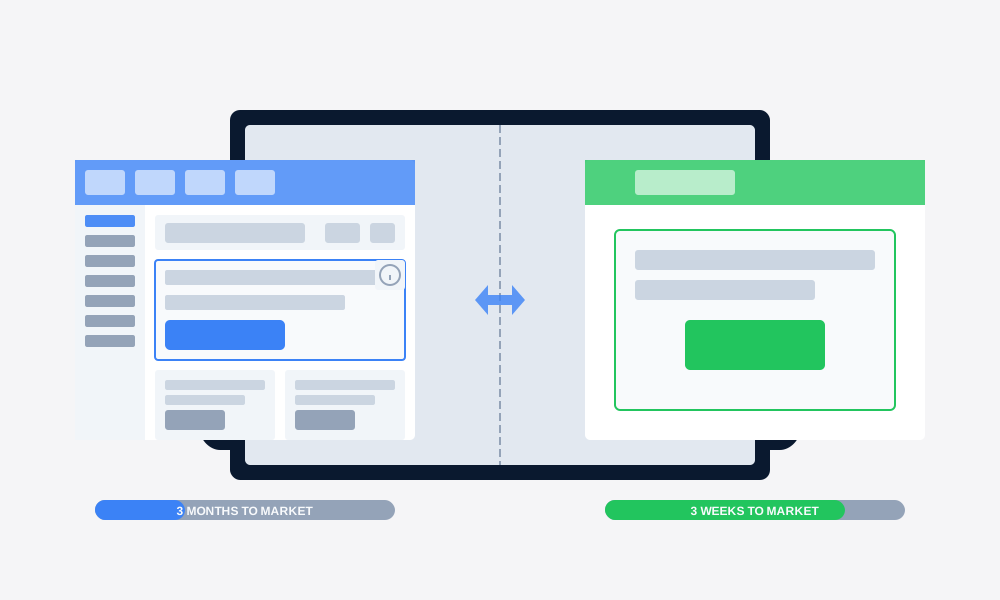
The Minimum Viable Product (MVP) promises a lean, fast way to test your idea: build the smallest thing that delivers value, launch it, and learn from real users. But in practice, MVPs often balloon into bloated projects—packed with extra features, over-engineered tech, or polished details that delay launches and drain budgets. Why does this happen? Teams fall into traps like chasing perfection, mimicking competitors, or over-preparing for hypothetical scenarios. This article dives into five common pitfalls that sabotage your MVP’s “minimal” nature and offers a practical framework to stay lean, all illustrated with hypothetical examples.
Bloat doesn’t happen by accident—it creeps in through decisions that feel smart at the time. Here are five traps to watch for:
What It Is: Adding “nice-to-have” features that aren’t critical to testing your core idea.
Example: Imagine a startup building a task management app. The core goal is simple: let users create and track tasks. But the team adds file sharing, color-coded tags, and a chat feature—thinking “users might want these later.” The result? A three-month delay for features no one asked for yet.
Why It Hurts: Every extra feature means more code, more testing, and more risk—pushing your launch further out.
What It Is: Building infrastructure for scale or complexity you don’t need yet.
Example: A small team launches a niche analytics tool for local businesses. Instead of a simple database, they opt for a microservices architecture with Kubernetes, anticipating thousands of users. For their initial 50 customers, this overkill adds weeks of setup time and steep hosting costs.
Why It Hurts: You’re solving problems you don’t have, not the ones you do.
What It Is: Obsessing over aesthetics or non-critical details before validating the idea.
Example: A food delivery app team spends a month perfecting animated transitions and custom icons. Meanwhile, users just want to know if orders arrive on time—leaving the core functionality untested and the launch delayed.
Why It Hurts: Time spent on polish is time not spent learning what users value.
What It Is: Copying features from bigger players instead of focusing on your unique value.
Example: A tutoring platform sees competitors with live chat and video backgrounds. They build both before testing their core scheduling feature. Months later, they launch—only to find users cared more about easy booking than flashy extras.
Why It Hurts: You’re building someone else’s product, not yours.
What It Is: Expanding the MVP to cover edge cases or unlikely scenarios.
Example: A logistics app for local deliveries builds multi-language support and dynamic routing for international markets. For their single-city pilot, this adds complexity with zero payoff—delaying feedback from their real audience.
Why It Hurts: You’re guessing at needs instead of proving them.
These traps turn a lean MVP into a slow, costly beast. But there’s a way out.
To keep your MVP minimal, follow these five steps. Each comes with practical tips and hypothetical examples to guide you:
What to Do: Write one clear sentence about the user pain you’re solving—no more, no less.
Tip: Narrow it down. “Book vet appointments fast” beats “manage all pet care needs.”
Example: A pet care startup skips photo galleries and diet trackers, focusing solely on a booking tool. They launch in four weeks and learn vets want reminders too—insight they’d have missed with a broader scope.
What to Do: Identify the 20% of features that deliver 80% of the value, and cut the rest.
Example: A job board team prioritizes search and filters over social sharing or profile badges. They launch with a bare-bones site, get 200 sign-ups, and discover employers want analytics—guiding their next iteration.
Tip: If it’s not essential to the core problem, save it for later.
What to Do: Use simple, proven tools over cutting-edge setups.
Example: A retail analytics tool starts with a basic SQL database and a REST API, skipping a fancy cloud-native stack. They launch in six weeks, serve 100 stores, and scale only when demand spikes.
Tip: Ask: “What’s the simplest thing that works?” Build that.
What to Do: Validate assumptions with wireframes, mockups, or user interviews first.
Example: An event app team shows wireframes of a ticketing feature to 20 organizers. Half say they’d skip a “discount code” option—saving weeks of coding for a feature no one wanted yet.
Tip: Users might hate your “genius” idea. Find out early.
What to Do: Design your MVP as a starting point, not a final product. Plan for changes.
Example: A fitness app launches with workout tracking only, cutting meal plans and leaderboards. After 300 users sign up, feedback shows demand for progress charts—added in the next update.
Tip: Keep a “later” list for cut features, and let data decide what comes back.
A lean MVP delivers big wins:
Hypothetical Case: A startup builds a minimal event ticketing app—just enough to sell passes and track attendees. They launch in six weeks, gain 500 users, and learn organizers want refund tools. By staying lean, they adapt fast and grow.
The MVP’s power lies in its simplicity: solve one problem well, test it with users, and iterate based on what you learn. The traps—feature creep, over-engineering, and the rest—pull you away from that goal, wasting time and money. But with a clear framework, you can sidestep them and build something minimal yet impactful. So, take a step back. Ask: What’s the least I can build to prove this idea works? Start there, launch it, and let your users show you the way forward.
© 2026. All Rights Reserved.